Henrik Jenkins · 13 September 2026
Strategic Content Distribution Patterns in Emerging Online Publishing Ecosystems
Emerging online publishing ecosystems have shifted content distribution away from traditional website-centric models toward multi-platform strategies that rely on algorithmic amplification, direct subscriber channels, and decentralized networks. Observers note that these patterns developed rapidly between 2023 and 2026 as publishers adapted to changes in search visibility, social feed mechanics, and audience fragmentation. Research from the Reuters Institute indicates that more than 60 percent of digital news traffic now arrives through pathways other than direct website visits, with newsletters, messaging apps, and short-form video platforms serving as primary entry points.
Platform Diversification and Audience Routing
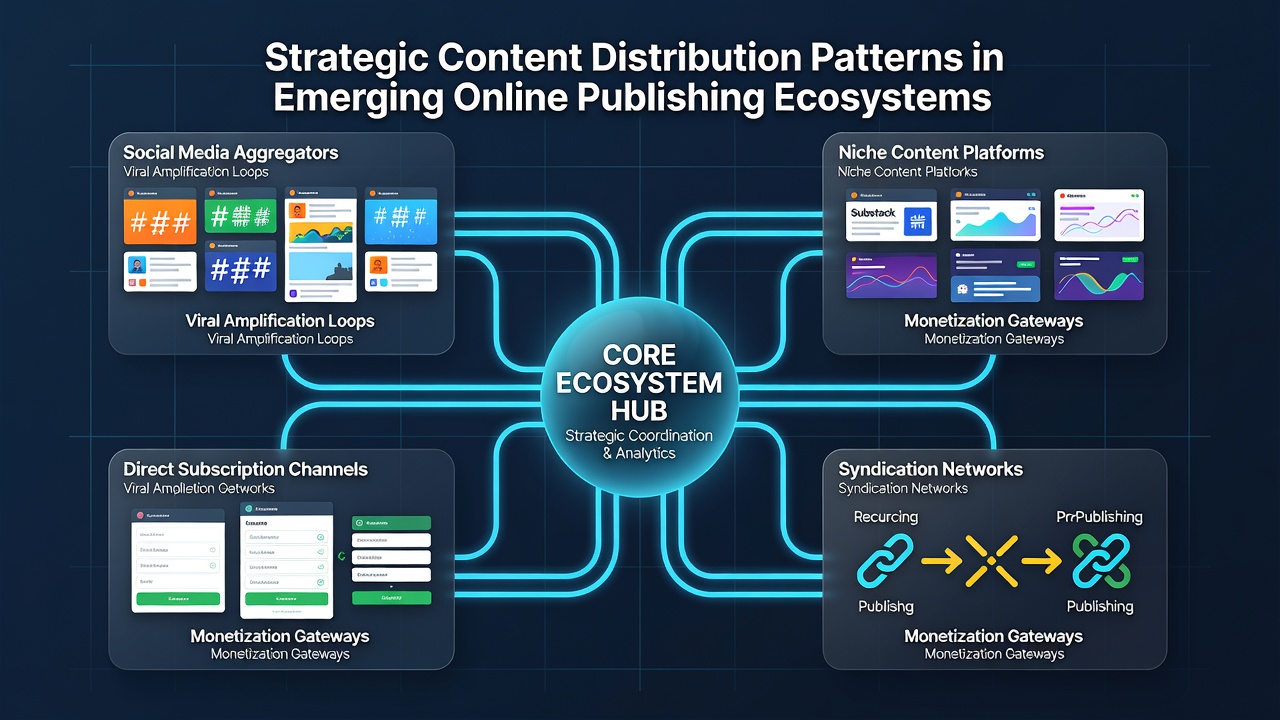
Publishers distribute articles, podcasts, and interactive features across several surfaces simultaneously, including Substack, LinkedIn newsletters, TikTok explainers, and Discord communities. Data from the Australian Communications and Media Authority shows that Australian news organizations increased their use of messaging apps for story delivery by 42 percent between 2024 and 2026. These routes allow direct relationships with readers while reducing dependence on any single algorithm. Yet the same data reveals that reach on these platforms remains uneven, with smaller outlets capturing less than 15 percent of total impressions compared with established brands.
One study from the University of Oxford's Reuters Institute tracked 200 European publishers and found that cross-posting the same story to four or more surfaces raised overall reach by an average of 28 percent, although engagement depth varied by format. Longer-form pieces performed better in email and podcast formats, whereas visual summaries drove higher completion rates on short-video platforms. Those patterns hold across multiple markets, suggesting that format adaptation rather than simple duplication produces stronger results.
Algorithmic Timing and Content Sequencing
Strategic distribution now incorporates precise timing based on platform-specific user activity peaks. Canadian research published by the Canadian Media Concentration Research Project in early 2026 documented that posts scheduled between 7:00 and 9:00 a.m. local time on weekdays generated 35 percent more initial impressions on regional social networks than identical content posted later in the day. Publishers combine these windows with sequential releases, beginning with teaser clips on visual platforms and directing interested users toward full articles hosted on owned channels.
September 2026 brought additional complexity when several major platforms updated their recommendation systems to prioritize original reporting over aggregated summaries. Industry reports indicate that outlets emphasizing unique data visualizations and on-the-ground sourcing experienced measurable lifts in distribution priority after the updates. In contrast, sites relying heavily on repackaged wire content saw distribution throttled on the same surfaces.
Data Integration and Performance Measurement
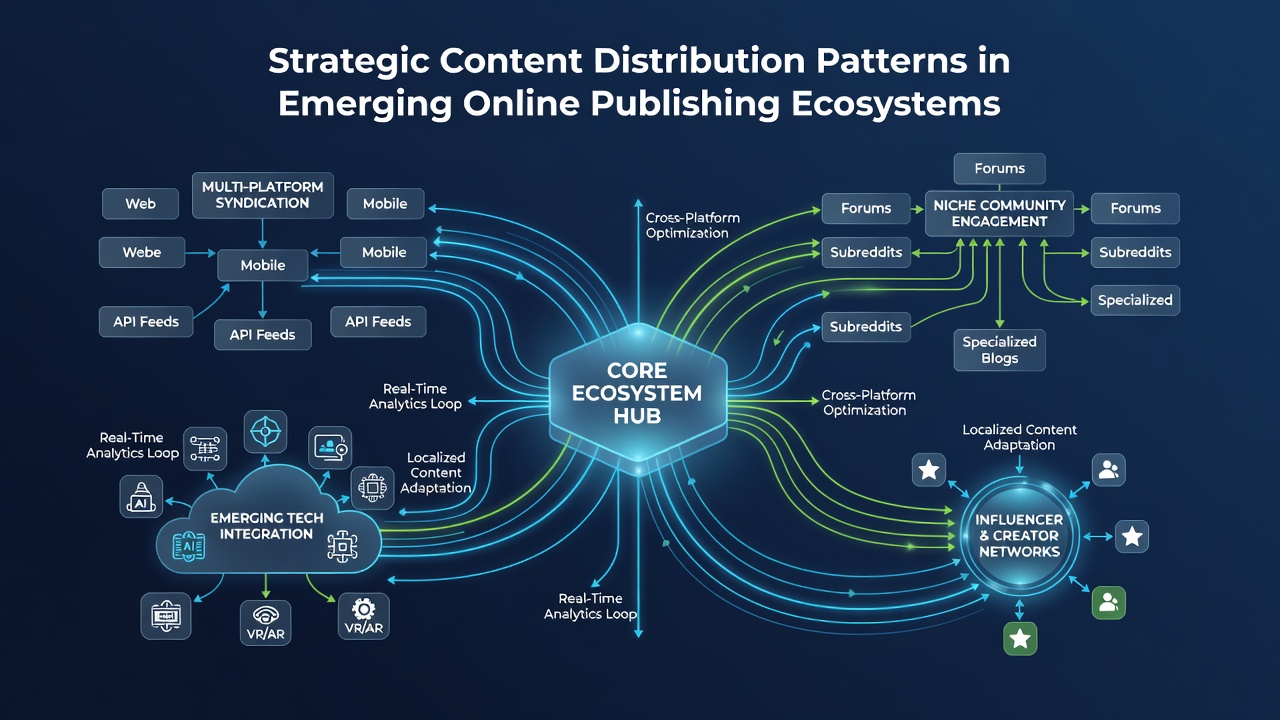
Advanced analytics tools now aggregate signals from multiple distribution points into unified dashboards. European Commission digital single market documentation from mid-2026 highlights that publishers using integrated measurement frameworks reduced content duplication costs by approximately 19 percent while maintaining audience reach. These systems track first-party data such as subscriber open rates, video completion percentages, and referral paths, allowing teams to adjust distribution emphasis in near real time.
Academic analysis from MIT's Center for Constructive Communication examined 150 mid-sized newsrooms and determined that organizations combining automated scheduling with human editorial oversight achieved 23 percent higher sustained engagement than those using fully automated systems. The difference appeared most clearly in retention metrics measured six months after initial publication.
Regulatory and Infrastructure Influences
Emerging regulations continue to shape distribution options. Updates to the EU Digital Services Act scheduled for enforcement in late 2026 require greater transparency around algorithmic amplification, prompting publishers to diversify away from single-platform dependence. Similar transparency measures under consideration in Australia and Canada have encouraged investment in owned channels such as mobile apps adn email lists. Industry associations report that organizations maintaining at least three independent distribution vectors experienced fewer traffic disruptions during previous platform policy changes.
Conclusion
Strategic content distribution in emerging ecosystems rests on coordinated use of algorithmic surfaces, direct channels, and data-informed sequencing. Figures from multiple regulatory and academic sources demonstrate measurable advantages for organizations that adapt formats to each platform while preserving core reporting value. As infrastructure and policy environments evolve through 2026 and beyond, the patterns observed so far suggest continued emphasis on diversification and measurement integration rather than reliance on any single pathway.